
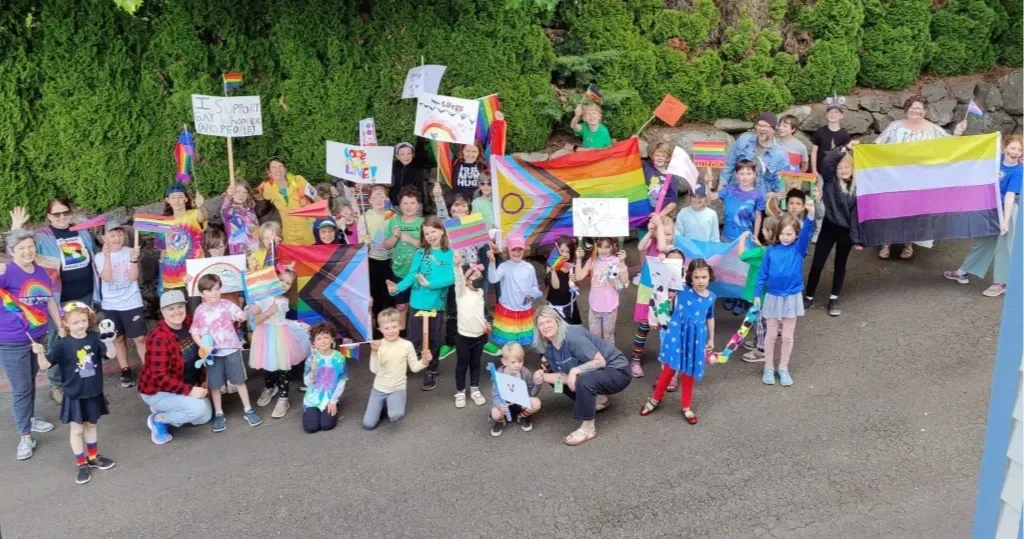
Equity, Inclusion & Social Justice
The Bridge School is committed to building authentic community inclusive of diverse voices, perspectives, and identities in recognition of our interconnectedness.
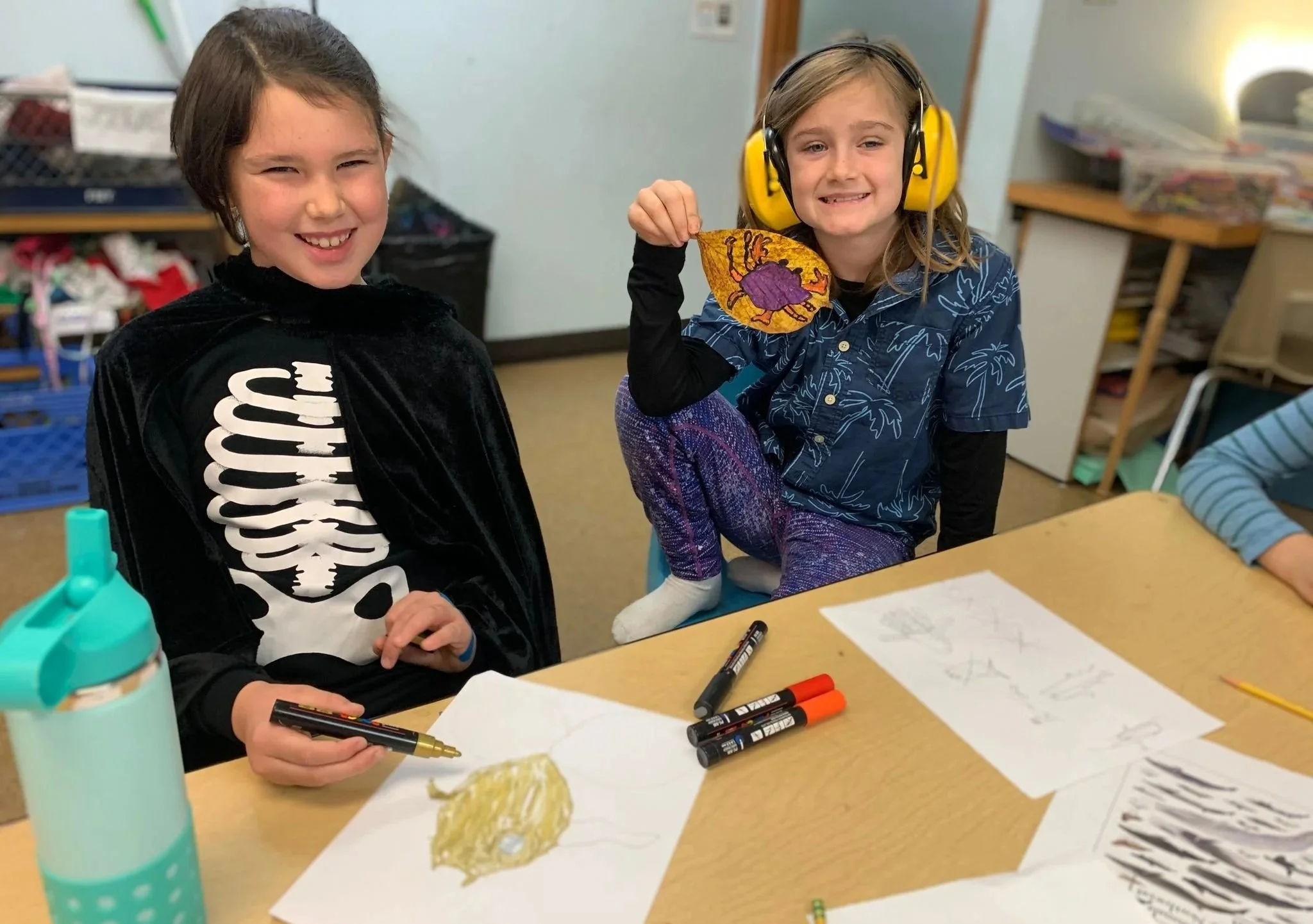
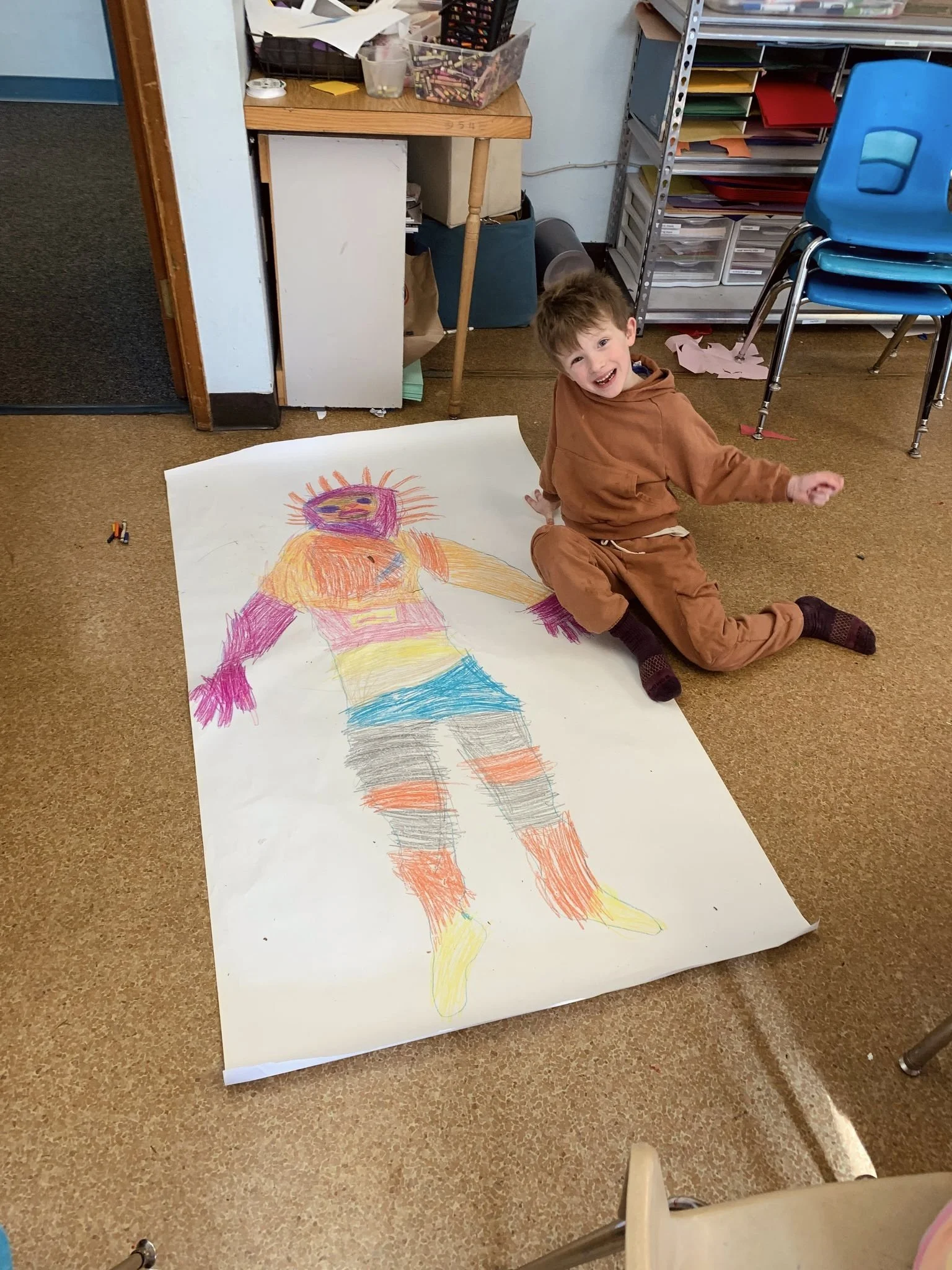
Our Commitment to Equity & Inclusion
We strive to center racial equity in our classrooms and community in order to change existing systems that perpetuate inequity. We support gender inclusion, creating safe spaces for full expression of gender identity. Students are encouraged to engage in courageous conversations and approach complex issues with curiosity and critical thinking. We see this as our responsibility as educators, caregivers and community.
Statement on Social Justice
We engage in social justice at the Bridge School.
To us, social justice means removing barriers for people who’ve been oppressed based on identities including, but not limited to, race, culture, ethnicity, nationality, disability status, socio-economic status, religion, gender, LGBTQIA+ identity, or neurotype.
As a school, we work to amplify the voices of marginalized identities and decenter whiteness.
We prepare students to recognize and celebrate their own identities, honor others’ identities’, and notice and respond to injustice as advocates.
We support families in contributing to positive change in our communities and the broader world.
We commit to continuous learning and recognize that social justice is a life-long pursuit.

Definitions
Interconnectedness: The state of being connected with each other.
Inclusion: The act of creating environments in which any individual or group can be and feel welcomed, respected, supported, and valued to fully participate. An inclusive and welcoming climate embraces differences and offers respect in words and actions for all people.
Equity: The policies and practices used to ensure the fair treatment, access, opportunity, and advancement for all people, while at the same time trying to identify and eliminate barriers that have historically prevented the full participation of some individuals or groups.
Racial Equity: Racial equity refers to what a genuinely non-racist society would look like. In a racially equitable society, the distribution of society’s benefits and burdens would not be skewed by race. In other words, racial equity would be a reality in which a person is no more or less likely to experience society’s benefits or burdens just because of the color of their skin. This is in contrast to the current state of affairs in which a person of color is more likely to live in poverty, be imprisoned, drop out of high school, be unemployed and experience poor health outcomes like diabetes, heart disease, depression and other potentially fatal diseases. Racial equity holds society to a higher standard. It demands that we pay attention not just to individual-level discrimination, but to overall social outcomes. (Source)
Land Acknowledgement
The Bridge School acknowledges that we are on the traditional land of the Coast Salish people, including the Duwamish People, past and present. We recognize the stewardship of the lands and waters by the Coast Salish people since time immemorial and strive to honor their example. This acknowledgment does not take the place of authentic relationships with indigenous communities, but serves as a first step in educating ourselves about the peoples whose land we reside on today.